Matchstick Puzzles
Updated October 2026 · 11 free printables
Printable matchstick puzzles for 1st to 4th grade. Fix wrong equations written in matchstick numbers by moving, adding or taking away sticks, turn one digit into another, count the squares and triangles hiding in stick shapes, and solve picture classics: make the fish swim the other way, turn the house around and get the cherry out of the glass.
A computer solver checked every equation puzzle, so each one has exactly one answer, and the shape puzzles were checked the same way. The answer key on page 2 shows each moved stick in red and its old place as a gray dashed line. The pages start easy and get harder, ending with two-stick moves and square puzzles for 4th grade.
All 11 Matchstick Puzzles, One by One
Here is a closer look at every page in this collection: what it practices, which grade it fits and a tip for each one.
-
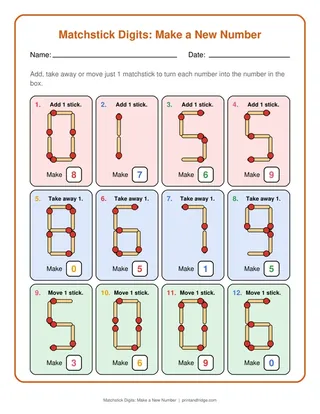
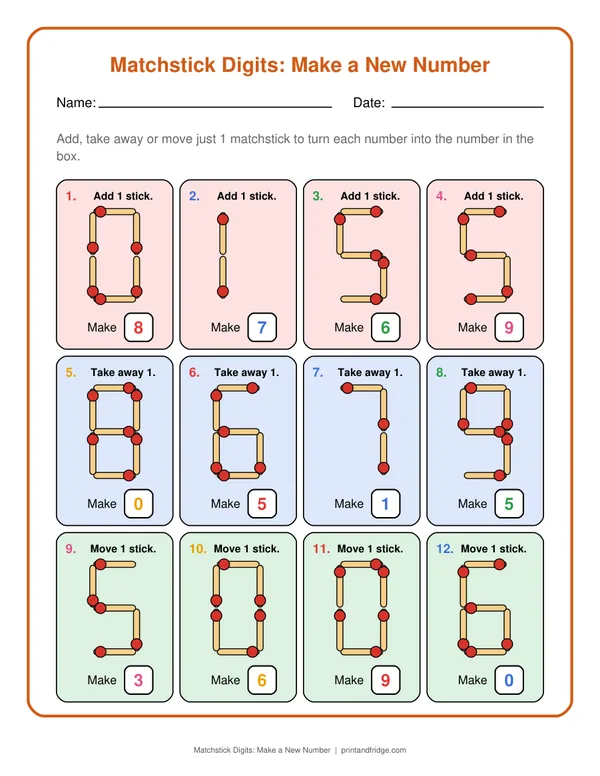
1. Matchstick Digits: Make a New Number
A free printable matchstick digits: make a new number worksheet with an answer key. Add, take away or move just 1 matchstick to turn each number into the number in the box. It matches first grade goals, roughly ages 6 to 7. Trace the big number with a finger first, then color it in your favorite color.
-
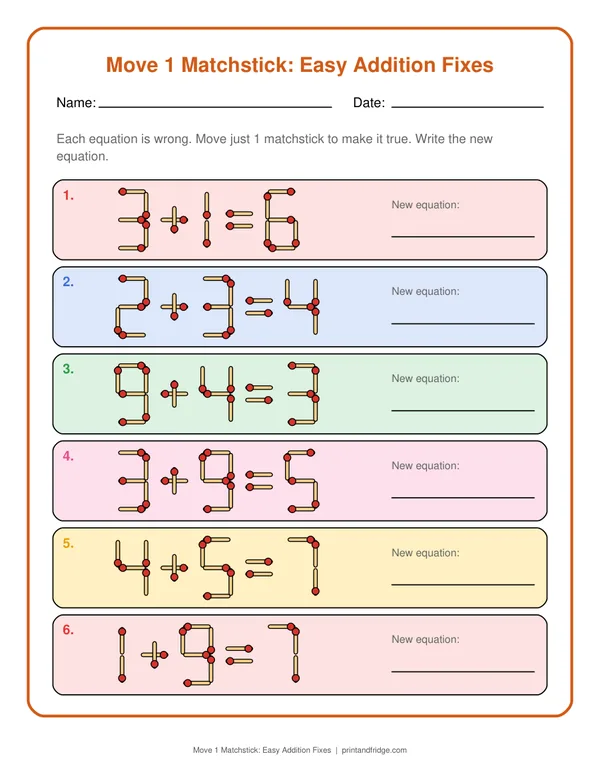
2. Move 1 Matchstick: Easy Addition Fixes
A free printable move 1 matchstick: easy addition fixes worksheet with an answer key. Each equation is wrong. Move just 1 matchstick to make it true. Write the new equation. First graders can do it on their own once they know the strategy at the top of the page. Have your child say each fact out loud while writing the answer.
-
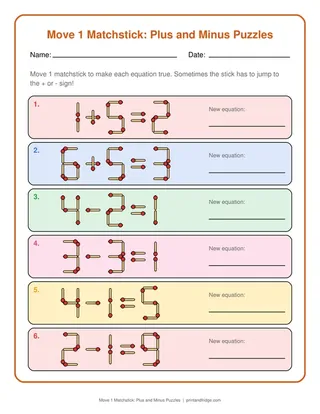
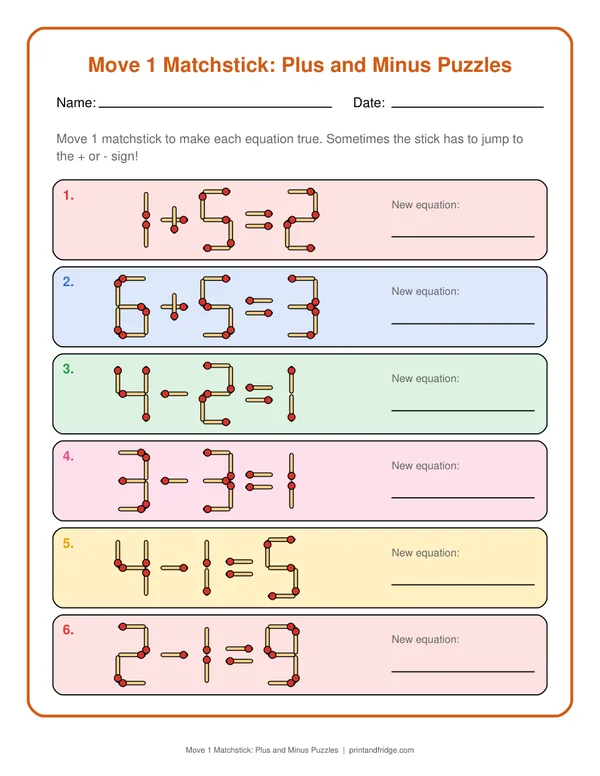
3. Move 1 Matchstick: Plus and Minus Puzzles
A free printable move 1 matchstick: plus and minus puzzles worksheet with an answer key. Move 1 matchstick to make each equation true. Sometimes the stick has to jump to the + or - sign! Second graders usually finish it in 10 to 15 minutes. Check each answer by adding it back to the number taken away.
-
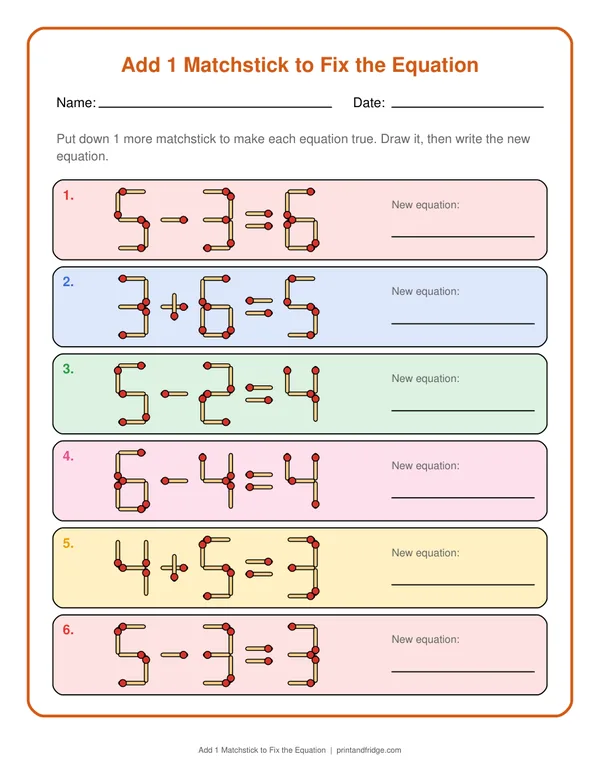
4. Add 1 Matchstick to Fix the Equation
A free printable add 1 matchstick to fix the equation worksheet with an answer key. Put down 1 more matchstick to make each equation true. Draw it, then write the new equation. It fits second grade, around ages 7 to 8. Use small objects like buttons or cereal to check tricky problems.
-
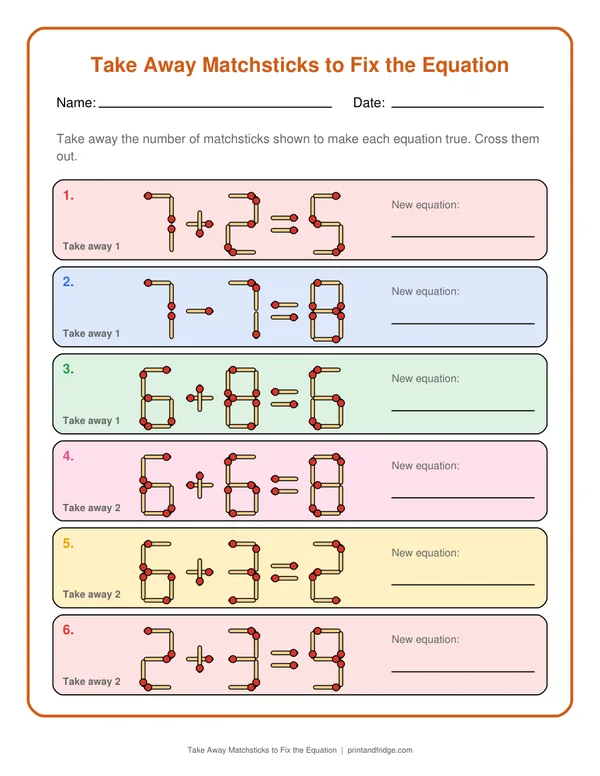
5. Take Away Matchsticks to Fix the Equation
A free printable take away matchsticks to fix the equation worksheet with an answer key. Take away the number of matchsticks shown to make each equation true. Cross them out. It fits second grade, around ages 7 to 8. Count back on your fingers or the number line for the hardest facts.
-
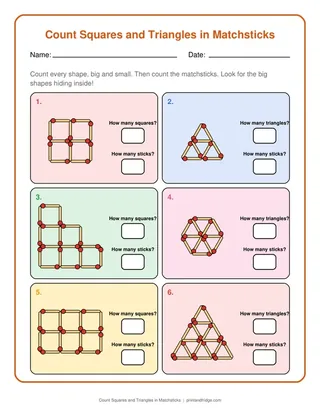
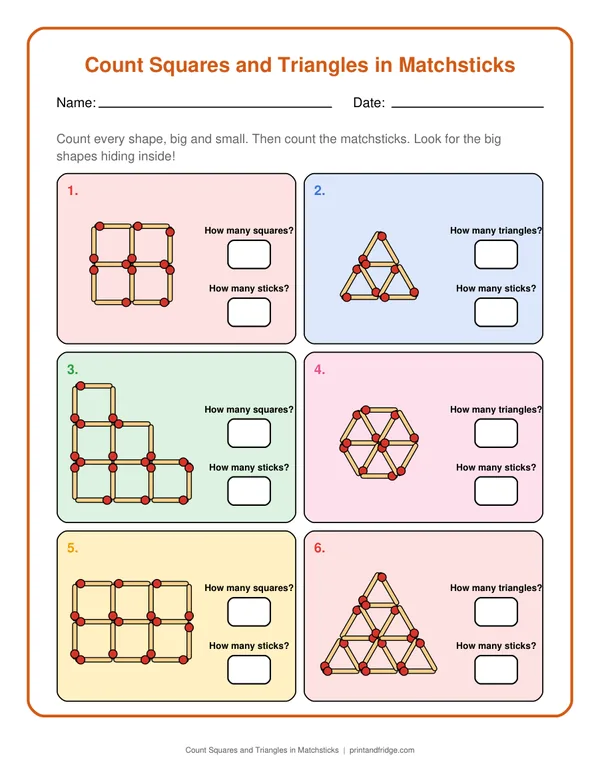
6. Count Squares and Triangles in Matchsticks
A free printable count squares and triangles in matchsticks worksheet with an answer key. Count every shape, big and small. Then count the matchsticks. Look for the big shapes hiding inside! Third graders can use it for practice, review or a quick check before a test.
-
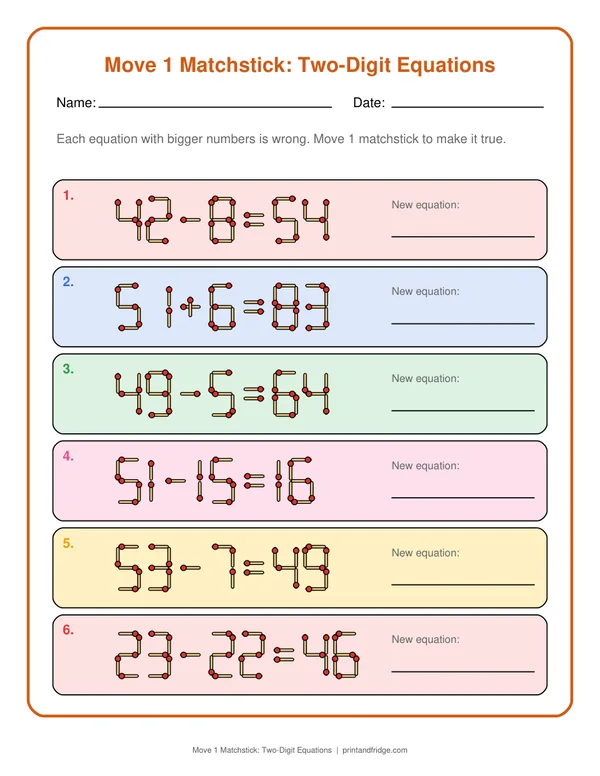
7. Move 1 Matchstick: Two-Digit Equations
A free printable move 1 matchstick: two-digit equations worksheet with an answer key. Each equation with bigger numbers is wrong. Move 1 matchstick to make it true. It is aimed at third grade, around ages 8 to 9.
-
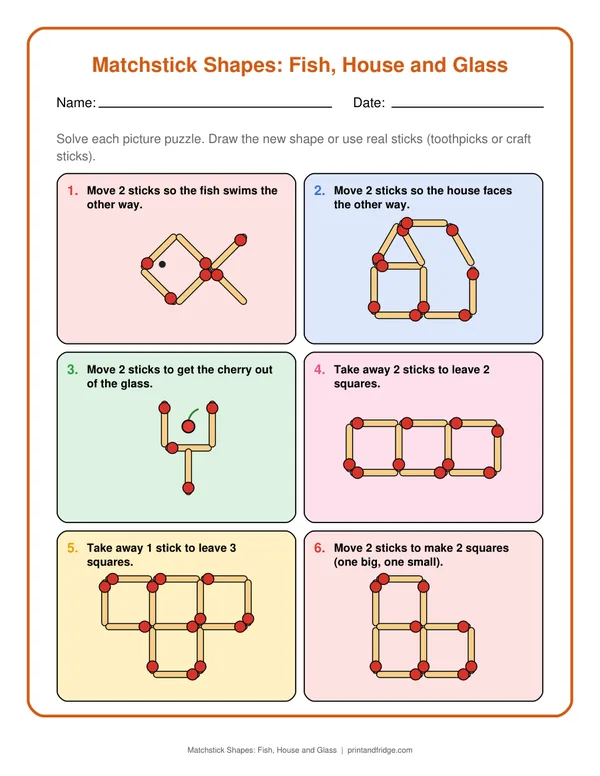
8. Matchstick Shapes: Fish, House and Glass
A free printable matchstick shapes: fish, house and glass worksheet with an answer key. Solve each picture puzzle. Draw the new shape or use real sticks (toothpicks or craft sticks). Third graders can use it for practice, review or a quick check before a test.
-
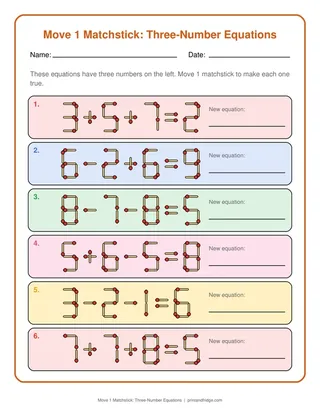
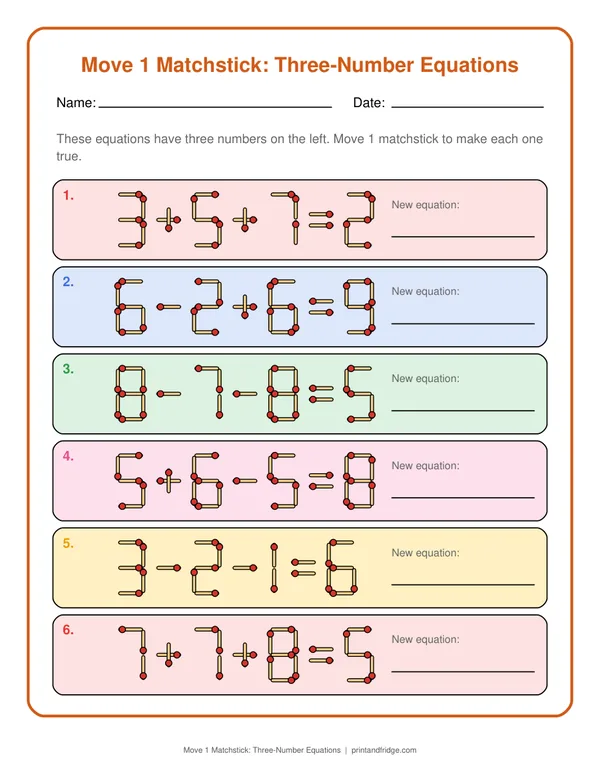
9. Move 1 Matchstick: Three-Number Equations
A free printable move 1 matchstick: three-number equations worksheet with an answer key. These equations have three numbers on the left. Move 1 matchstick to make each one true. It is built for fourth grade, around ages 9 to 10.
-
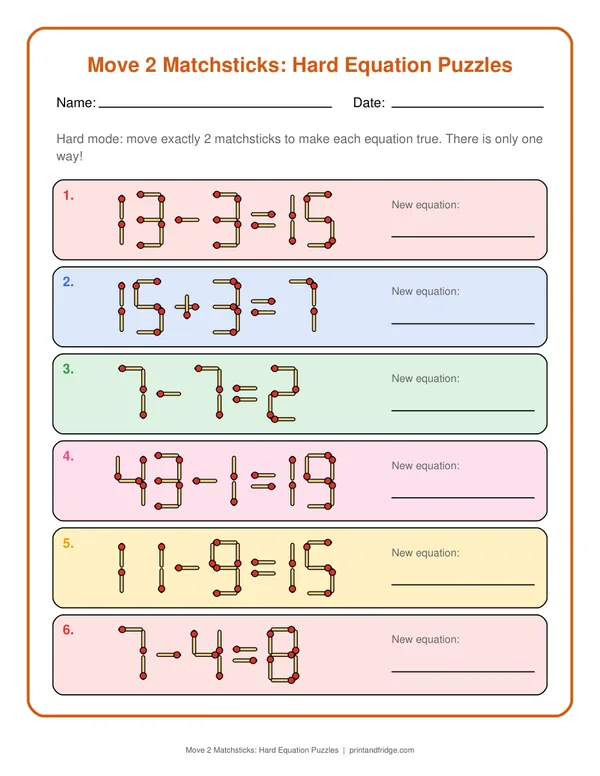
10. Move 2 Matchsticks: Hard Equation Puzzles
A free printable move 2 matchsticks: hard equation puzzles worksheet with an answer key. Hard mode: move exactly 2 matchsticks to make each equation true. There is only one way! It is built for fourth grade, around ages 9 to 10.
-
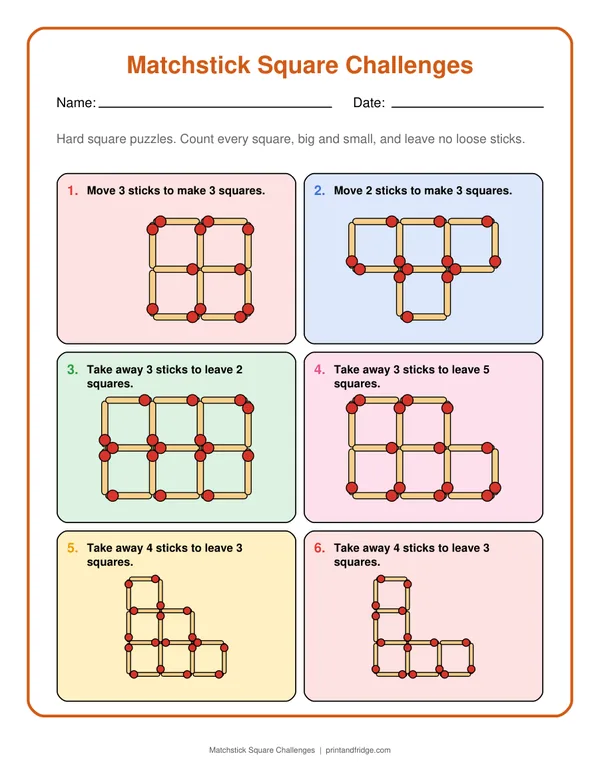
11. Matchstick Square Challenges
A free printable matchstick square challenges worksheet with an answer key. Hard square puzzles. Count every square, big and small, and leave no loose sticks. It is built for fourth grade, around ages 9 to 10.
Tips for matchstick puzzles
- Read the equation out loud first and say what is wrong with it, like 'six plus two is not five'.
- Look at which digits can change with one stick: a 6 can become a 5, 8 or 9, and a minus can become a plus.
- Build the puzzle with toothpicks and test each idea with your hands before drawing the answer.
Fun math facts
- The stick digits on these pages use the same seven positions as the numbers on a microwave or alarm clock.
- The number 8 uses all seven sticks, and the number 1 uses only two.
- Safety matches were invented in Sweden in the 1840s, and people have shared puzzles made with them ever since.
Fun ways to use your printables
- Make a family puzzle night: each person builds a wrong equation with toothpicks for the others to fix.
- Glue craft sticks onto cardboard to make a set of 0 to 9 stick digits for practice.
- Ask your child to invent a new fish or house shape and find out how many sticks it takes to turn it around.
How to print
Click Download PDF and print at 100% on US Letter or A4 paper. Page 1 is the worksheet and page 2 is the answer key, so choose “page 1” in the print dialog if you only want the practice page. Every worksheet is free for home, homeschool and classroom use, so print as many copies as you need.
Frequently asked questions
How do matchstick puzzles work?
The numbers and signs are built from sticks like the digits on a digital clock. You may move, add or take away only the number of sticks the puzzle allows, and the result has to be a true equation or the shape the puzzle asks for.
Can a stick move to the plus or minus sign?
Yes. Taking the upright stick from a + turns it into a -, and putting a stick across a - makes a +. Some of the hardest puzzles on these pages need exactly that move.
Do I need real matches?
No, and for young kids you should not use them. Toothpicks, cotton swabs or craft sticks work well: build the puzzle on the table, try a move, and then draw the answer on the worksheet.
What do matchstick puzzles teach?
Kids check equations again and again while looking for the move, so they practice adding and subtracting. They also learn to test ideas, notice shapes inside shapes and keep trying when the first guess is wrong.