Sequencing Worksheets
Updated October 2026 · 10 free printables
Free printable sequencing worksheets with picture stories kids put in order: building a snowman, a chick hatching, making a sandwich, brushing teeth, baking cookies, getting dressed for winter, washing a muddy dog, planting a seed, an ice cream cone melting, a day from morning to night and growing up from baby to grown-up.
Pre-K pages use 3-step stories with big pictures to number or cut and glue. Kindergarten pages have 4 steps and add the words first, next, then and last, short sentences to read, a missing step to draw and what-happens-next choices. Every page has an answer key on page 2.
All 10 Sequencing Worksheets, One by One
Here is a closer look at every page in this collection, with who it's best for and a coloring idea for each one.
-
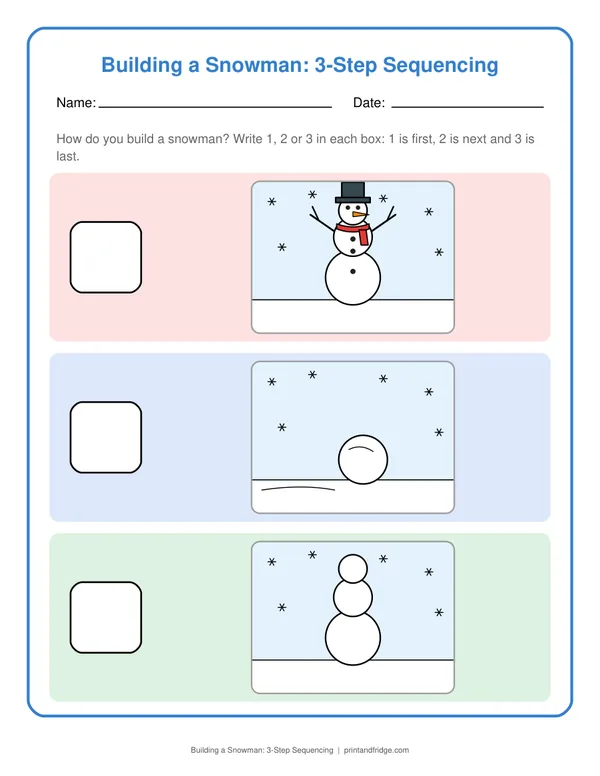
1. Building a Snowman: 3-Step Sequencing
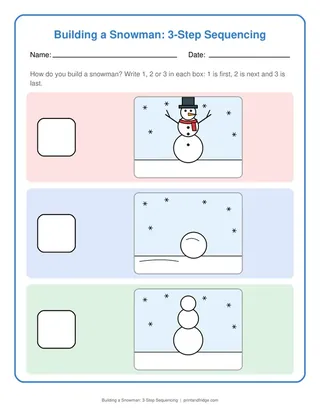
A 3-step picture story for preschool: a snowball rolling in the snow, three balls stacked up and the finished snowman with a hat, scarf and carrot nose. The pictures are mixed up; kids write 1, 2 and 3 to put them in order. The answer key is on page 2. It is made for pre-K and preschool, roughly ages 4 to 5, with big pictures and one number per page. Shade the snowballs with light blue.
-
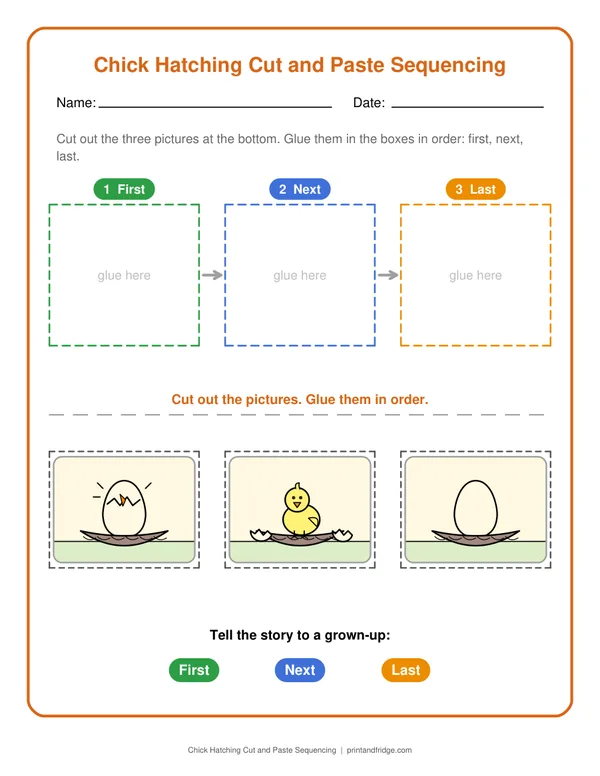
2. Chick Hatching Cut and Paste Sequencing
A first cut-and-paste story: an egg in a nest, the egg cracking and a fluffy chick standing between the shell pieces. Kids cut out the three pictures and glue them under First, Next and Last. The answer key is on page 2. Little ones can do most of it with crayons, and a grown-up can read the short questions aloud.
-
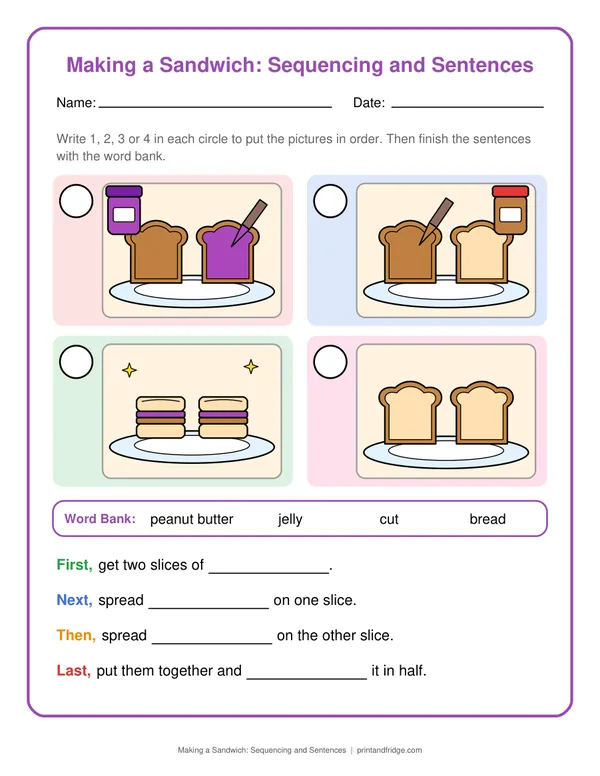
3. Making a Sandwich: Sequencing and Sentences
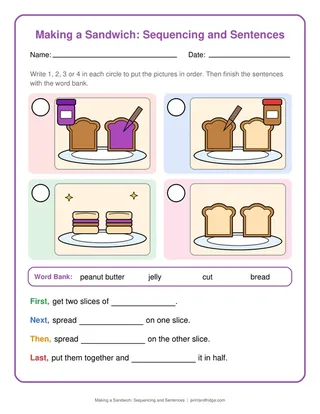
Four mixed-up pictures of making a peanut butter and jelly sandwich, from two slices of bread to a sandwich cut in half. Kids number the pictures and finish four first-next-then-last sentences. The answer key is on page 2. It suits ages 4 to 6, and little ones can count the pictures with a finger.
-
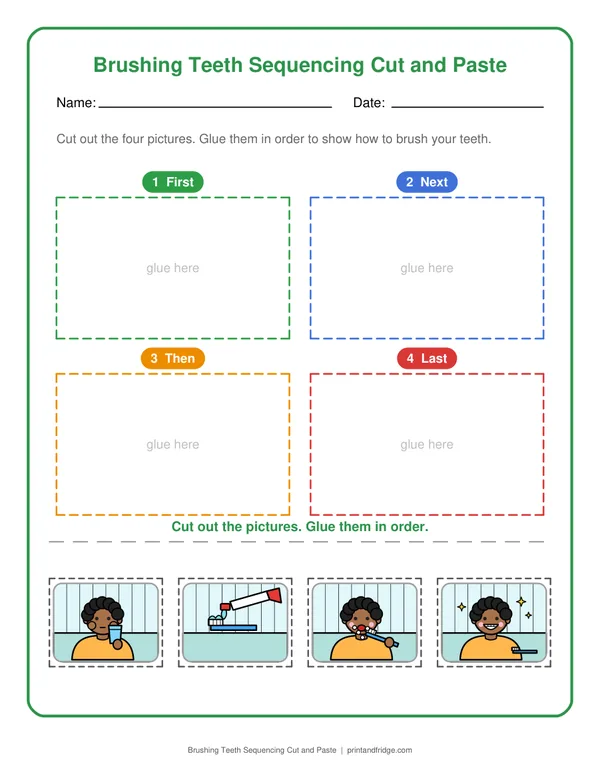
4. Brushing Teeth Sequencing Cut and Paste
A healthy-habits sequencing page: put toothpaste on the brush, brush up and down, rinse with water and smile. Kids cut out the four mixed-up pictures and glue them in the First, Next, Then and Last boxes. The answer key is on page 2. It suits ages 4 to 6, and little ones can count the pictures with a finger.
-
5. Baking Cookies: Match First, Next, Then, Last
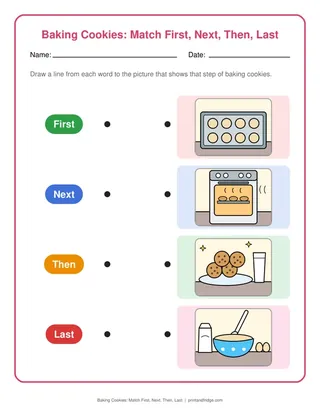
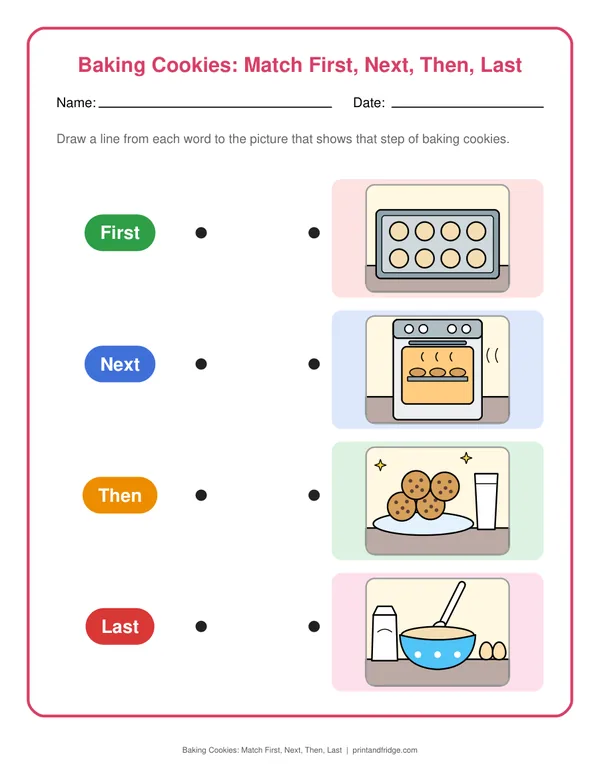
Sequencing words practice: mix the dough, put dough balls on a tray, bake them in the oven and eat the cookies with milk. Kids draw a line from First, Next, Then and Last to the right mixed-up picture. The answer key is on page 2. Big pictures and only a few tasks per page make it a gentle start for kindergartners.
-
6. Getting Dressed for Winter: Read and Number
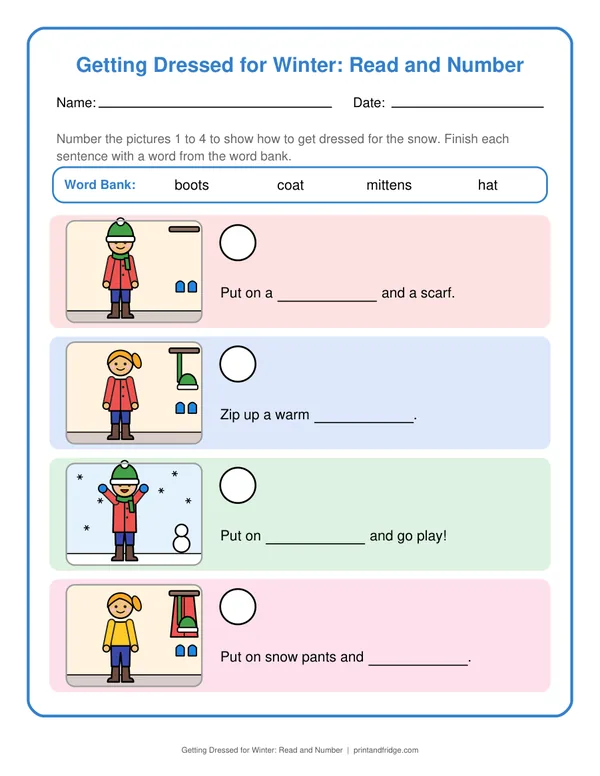
A girl gets ready to play in the snow: snow pants and boots, a warm coat, a hat and scarf, then mittens and out the door. Kids number the four mixed-up pictures and complete the sentence beside each one. The answer key is on page 2. Big pictures and only a few tasks per page make it a gentle start for kindergartners.
-
7. Washing the Dog: Story Sequencing Sentences
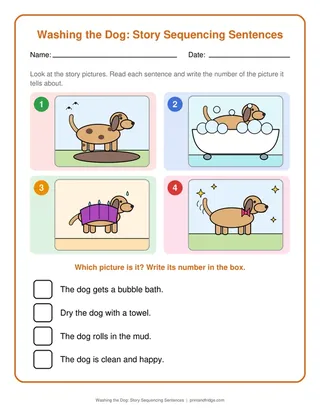
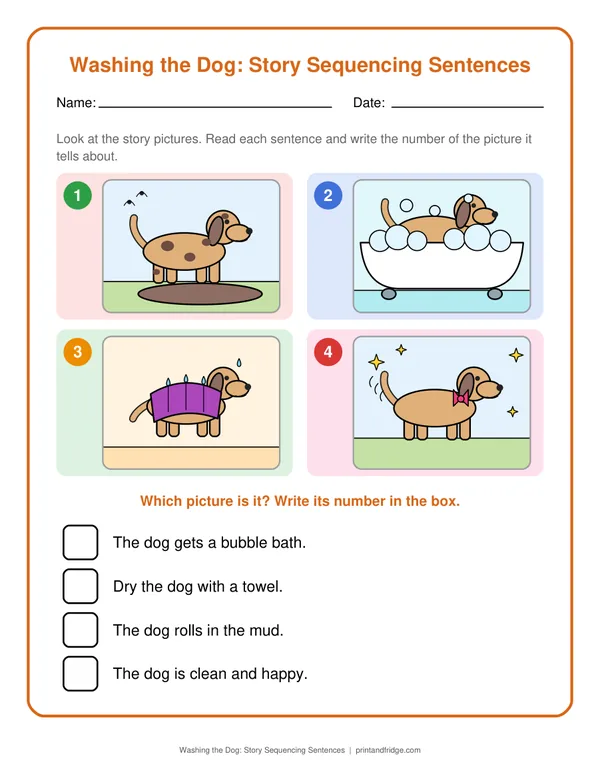
A four-picture story about a muddy puppy: it rolls in the mud, gets a bubble bath, is dried with a towel and ends up clean with a pink bow. Kids read four mixed-up sentences and match each one to its picture number. The answer key is on page 2. Big pictures and only a few tasks per page make it a gentle start for kindergartners. Give the collar a bright color.
-
8. First, Next, Last: Three Short Picture Stories
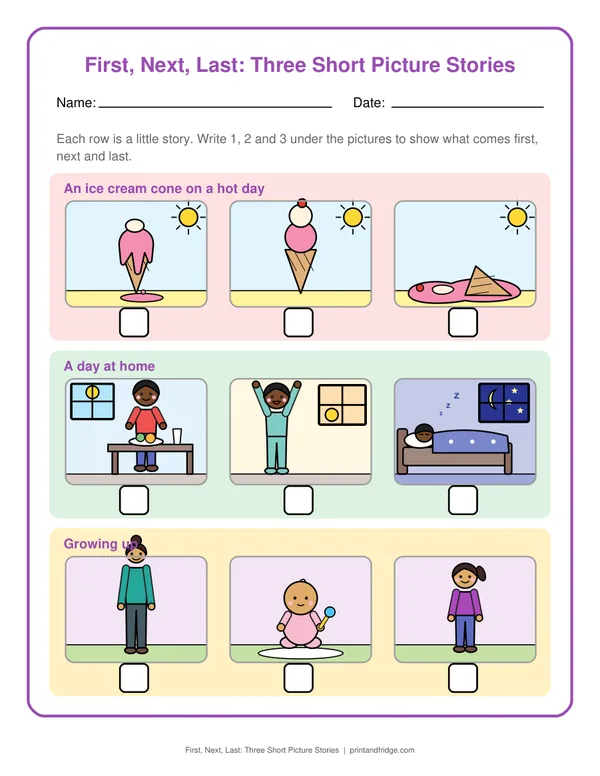
Three quick 3-step stories on one page: an ice cream cone melting in the sun, a day from morning to noon to night, and growing up from baby to kid to grown-up. Kids number the pictures in each row. The answer key is on page 2. It is made for pre-K and preschool, roughly ages 4 to 5, with big pictures and one number per page.
-
9. Planting a Seed: Draw the Missing Step
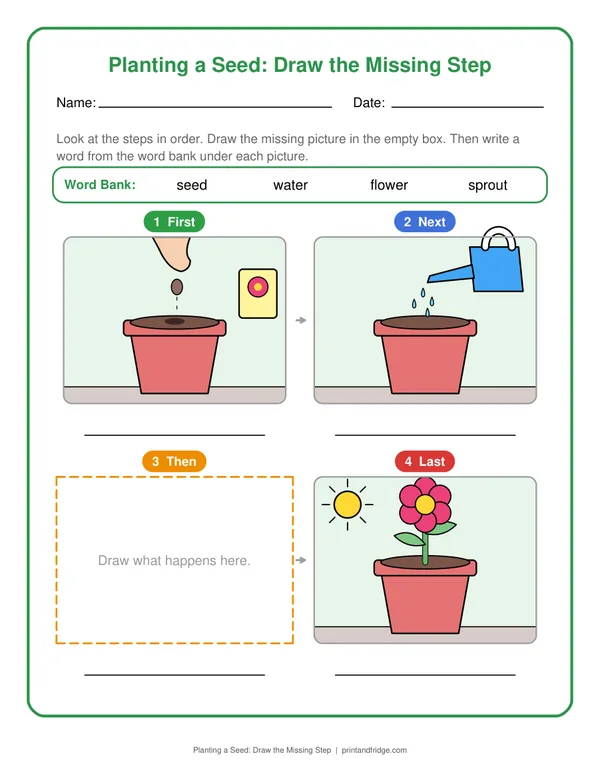
A gardening sequence with a twist: plant a seed in a flower pot, water it, watch a sprout pop up and see the flower bloom. One step is missing, so kids draw it, then label all four pictures with seed, water, sprout and flower. The answer key is on page 2. Big pictures and only a few tasks per page make it a gentle start for kindergartners.
-
10. What Happens Next? Picture Sequencing
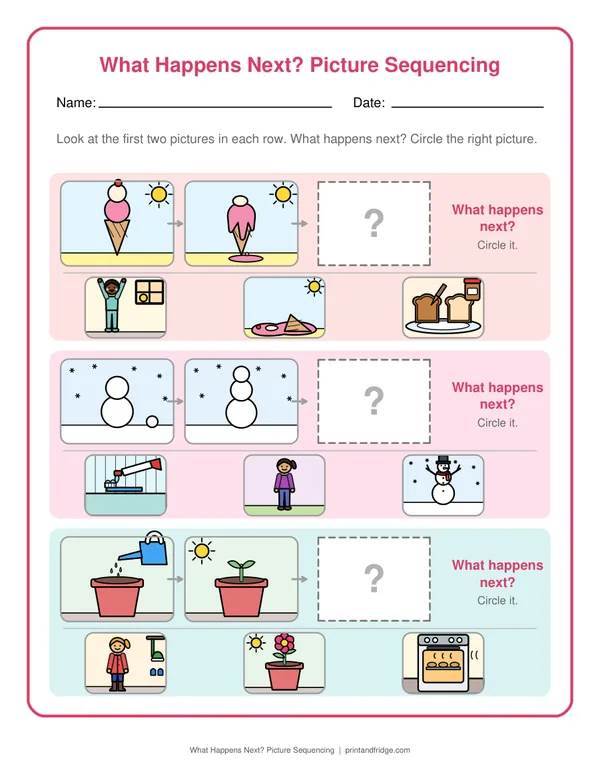
Three what-comes-next rows: a melting ice cream cone, a snowman that is almost done and a seedling in a flower pot. Kids look at two pictures in order and circle the one of three choices that comes next. The answer key is on page 2. It is made for pre-K and preschool, roughly ages 4 to 5, with big pictures and one number per page.
Tips for coloring Sequencing Worksheets
- Before numbering, ask your child to tell the story out loud using first, next, then and last.
- Lay the cut-out pictures in a row before gluing, so mistakes can still be fixed.
- If a step is tricky, ask what has to happen before it: can you eat the cookies before you bake them?
Fun facts about Sequencing Worksheets
- Retelling a story in order is a reading comprehension skill listed in the kindergarten standards.
- Sequencing words like first, next and last are among the first transition words children use in writing.
- Following a 3-step direction is a common milestone for children around age 4.
Fun ways to use your printables
- Take photos of a real activity, like baking or planting, and let your child put the prints in order.
- Act out a sequence: put on a coat, then a hat, then mittens, and let your child give the directions.
- After the missing-step page, let your child draw a whole 3-step story of their own day.
How to print
Click Download PDF on any page and print it at 100% on US Letter or A4 paper. Use regular printer paper for crayons and pencils, or cardstock for markers and paint. Every page here is free for home, classroom and party use, so feel free to print as many copies as you need.
Frequently asked questions
What is sequencing for preschoolers?
Sequencing means putting events in the order they happen: first, next, then, last. It helps kids retell stories, follow routines and later understand cause and effect and the plot of a book.
Should we start with 3 or 4 steps?
Start with 3-step stories like the snowman or the chick. When your child can explain why each picture comes where it does, move on to the 4-step stories and the sentence pages.
How do the cut and paste pages work?
Kids cut out the mixed-up pictures at the bottom of the page and glue each one in the First, Next, (Then) and Last boxes. The answer key shows the finished order.
How can I make sequencing part of the day?
Talk through real routines with the same words: first we wash our hands, next we eat, then we brush our teeth, last we read a book. The worksheets use routines kids already know.