Comic Strip Templates and Draw-the-Story Pages
Updated October 2026 · 9 free printables
Draw-the-story comics: four-panel strips where the first panel is drawn and captioned (Max the puppy finds a red balloon, Zip the rocket blasts off, Dino's birthday, Kitty and the butterfly, the snowman wakes up, Luna's rainbow) and kids draw what happens next in the other three. Each panel has a line for a caption.
Also here: blank comic strip templates with 4, 6 and 8 panels, a title line and caption lines, for stories of your own, book reports and drawn diaries.
All 9 Comic Strip Templates and Draw-the-Story Pages, One by One
Here is a closer look at every page in this collection, with who it's best for and a coloring idea for each one.
-
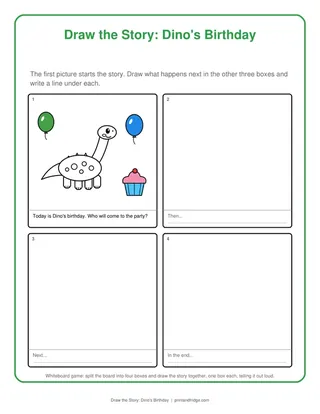
1. Draw the Story: Dino's Birthday
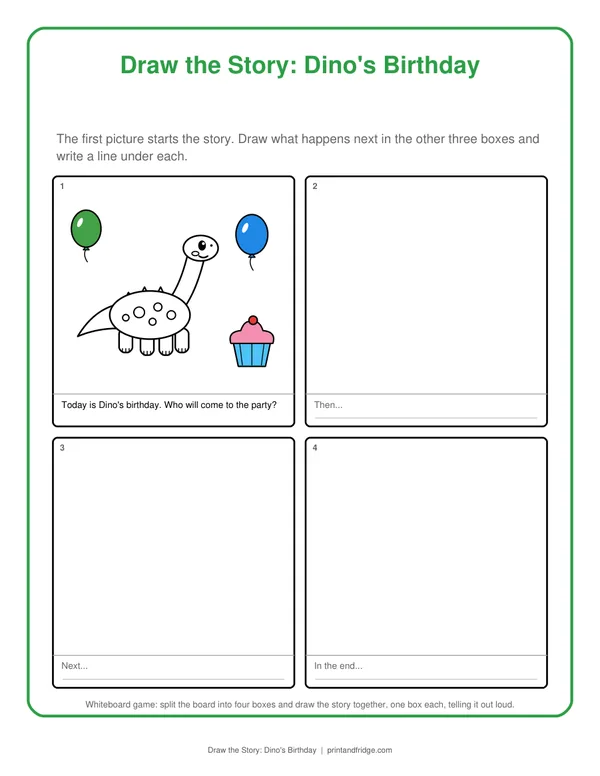
A four-panel comic strip with the first panel drawn: Today is Dino's birthday. Who will come to the party? Kids draw the next three panels and write a caption under each one, so the page becomes their own story. Little ones can do most of it with crayons, and a grown-up can read the short questions aloud. Green, blue or purple dinosaurs with contrasting spots look great.
-
2. Draw the Story: Kitty and the Butterfly
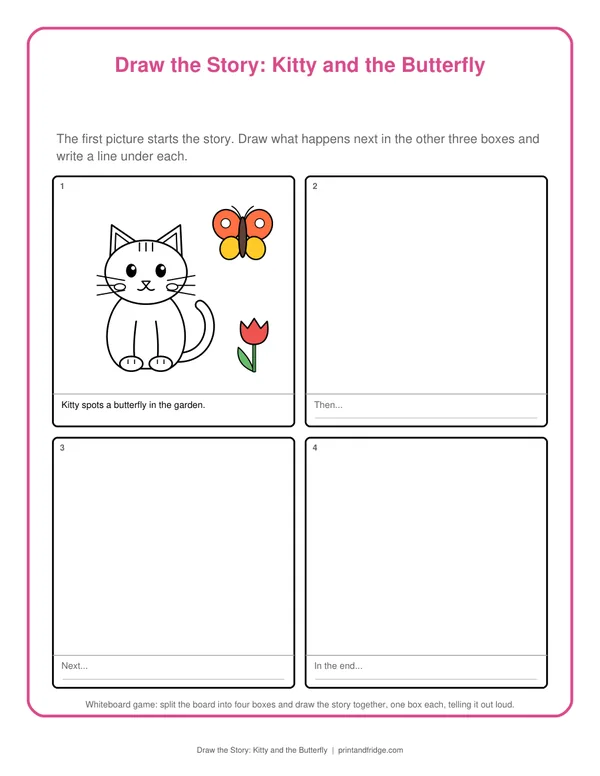
A four-panel comic strip with the first panel drawn: Kitty spots a butterfly in the garden. Kids draw the next three panels and write a caption under each one, so the page becomes their own story. It is made for pre-K and preschool, roughly ages 4 to 5, with big pictures and one number per page. Color the inside of the ears pink.
-
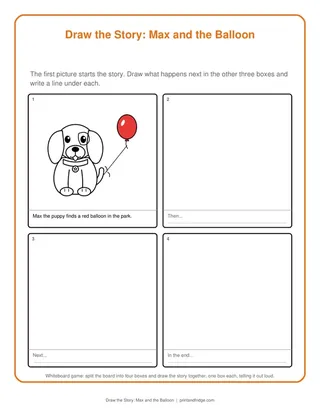
3. Draw the Story: Max and the Balloon
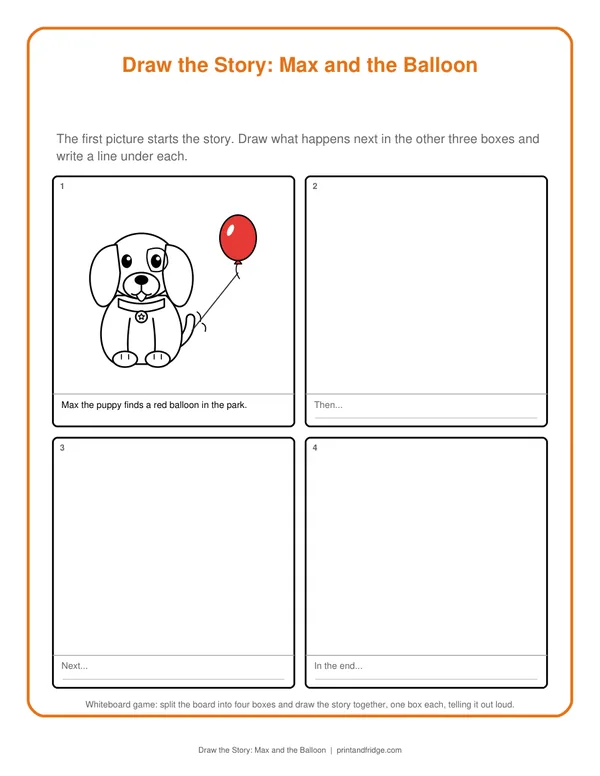
A four-panel comic strip with the first panel drawn: Max the puppy finds a red balloon in the park. Kids draw the next three panels and write a caption under each one, so the page becomes their own story. It suits ages 4 to 6, and little ones can count the pictures with a finger. Brown and white like a beagle, or golden like a retriever.
-
4. Draw the Story: Zip the Rocket
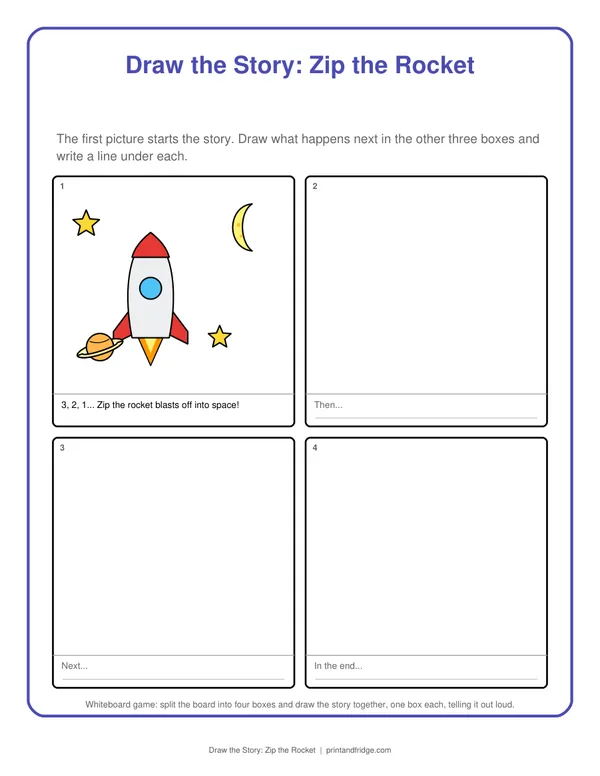
A four-panel comic strip with the first panel drawn: 3, 2, 1... Zip the rocket blasts off into space! Kids draw the next three panels and write a caption under each one, so the page becomes their own story. It suits ages 4 to 6, and little ones can count the pictures with a finger.
-
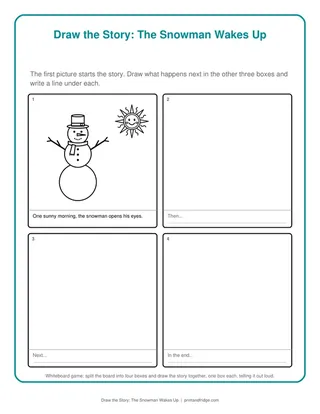
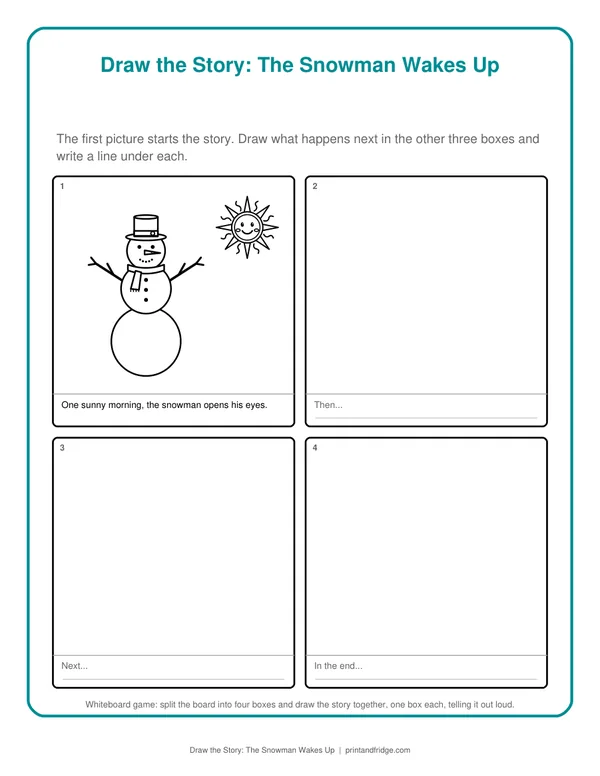
5. Draw the Story: The Snowman Wakes Up
A four-panel comic strip with the first panel drawn: One sunny morning, the snowman opens his eyes. Kids draw the next three panels and write a caption under each one, so the page becomes their own story. Big pictures and only a few tasks per page make it a gentle start for kindergartners. Shade the snowballs with light blue.
-
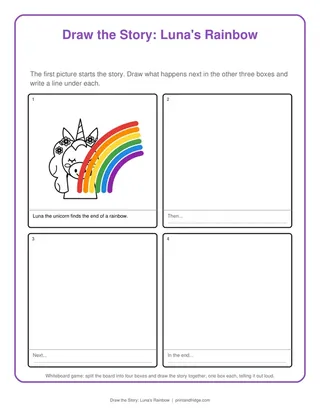
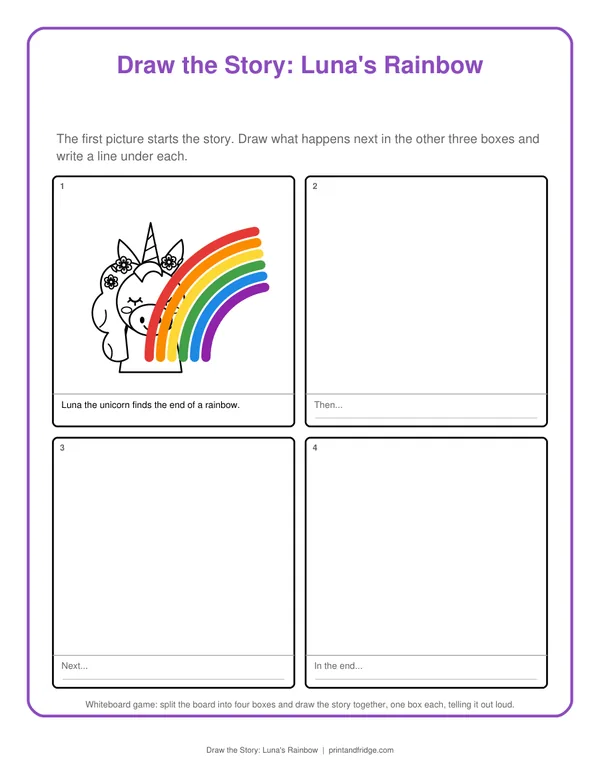
6. Draw the Story: Luna's Rainbow
A four-panel comic strip with the first panel drawn: Luna the unicorn finds the end of a rainbow. Kids draw the next three panels and write a caption under each one, so the page becomes their own story. It matches first grade goals, roughly ages 6 to 7. Make the horn gold or silver.
-
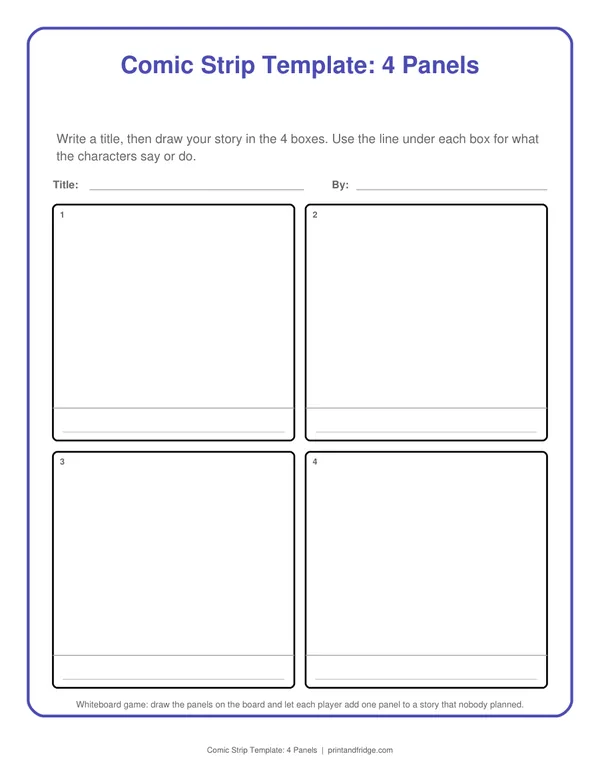
7. Comic Strip Template: 4 Panels
A blank 4-panel comic strip template with a title line, numbered panels and a caption line under each panel. Print it for comic making, story sequencing, a book report or a drawn weekend diary. Big pictures and only a few tasks per page make it a gentle start for kindergartners.
-
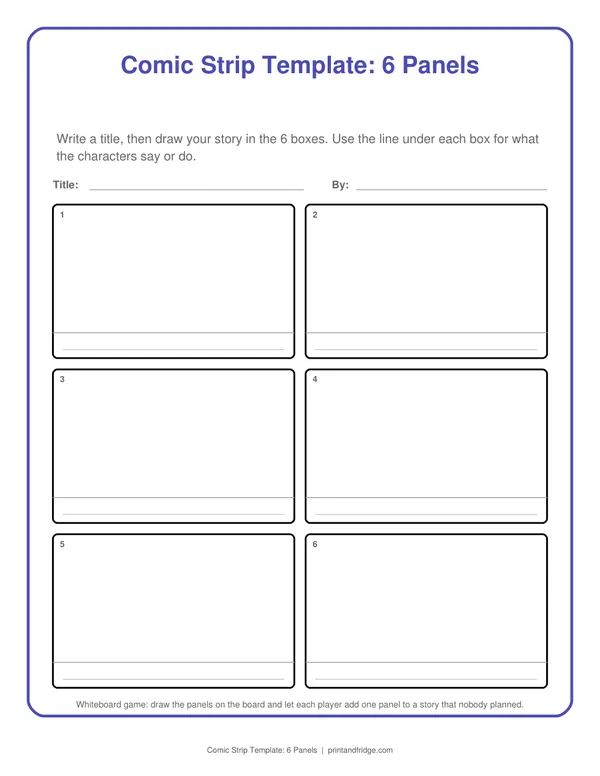
8. Comic Strip Template: 6 Panels
A blank 6-panel comic strip template with a title line, numbered panels and a caption line under each panel. Print it for comic making, story sequencing, a book report or a drawn weekend diary. It matches first grade goals, roughly ages 6 to 7.
-
9. Comic Strip Template: 8 Panels
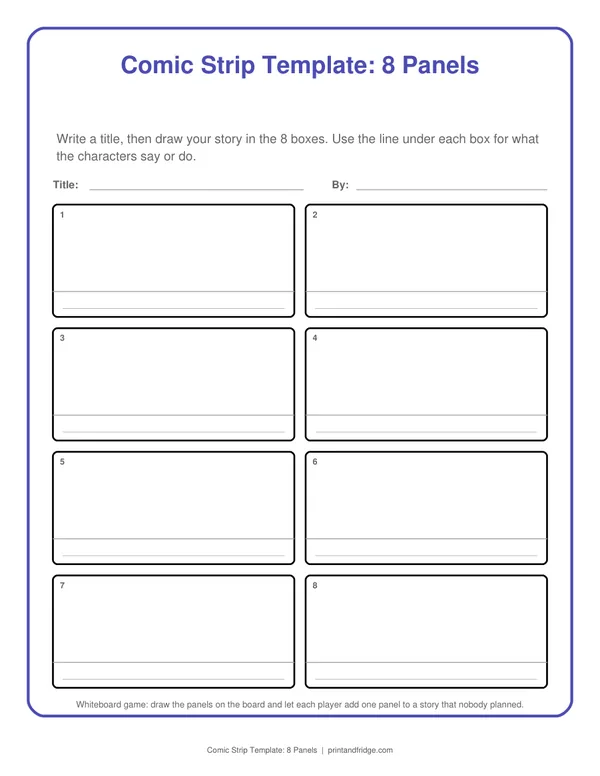
A blank 8-panel comic strip template with a title line, numbered panels and a caption line under each panel. Print it for comic making, story sequencing, a book report or a drawn weekend diary. It matches first grade goals, roughly ages 6 to 7.
Tips for coloring Comic Strip Templates and Draw-the-Story Pages
- Decide the ending first; then the middle panels are easy to draw.
- Use speech bubbles for what characters say and the caption line for what happens.
- Stick figures are fine; the story matters more than the drawing.
Fun facts about Comic Strip Templates and Draw-the-Story Pages
- A four-panel comic has a classic shape: setup, build, twist, ending.
- Making comics is used in schools for story sequencing, because panels force a clear order.
- The first newspaper comic strips appeared in the 1890s; many were only three or four panels long.
Fun ways to use your printables
- Pass the page around the family: everyone draws one panel.
- Turn a real event, like losing a tooth, into a four-panel comic.
- Staple several finished strips into a comic book with a cover.
How to print
Click Download PDF on any page and print it at 100% on US Letter or A4 paper. Use regular printer paper for crayons and pencils, or cardstock for markers and paint. Every page here is free for home, classroom and party use, so feel free to print as many copies as you need.
Frequently asked questions
How do you use the draw-the-story pages?
Read the first panel together and ask: what happens next? The child draws panel 2, writes or dictates a caption, and goes on to the end. Take turns on the whiteboard for a shared story.
Do kids have to write?
No. Younger children can tell the story while a grown-up writes the captions, or skip the words altogether.
Which blank template should I choose?
Four panels for beginners and short jokes, six for a complete story with a problem and an ending, eight for older kids who want more scenes.
Are these free for classrooms?
Yes. Print as many as you need for story sequencing, writing centers or an end-of-unit comic.